
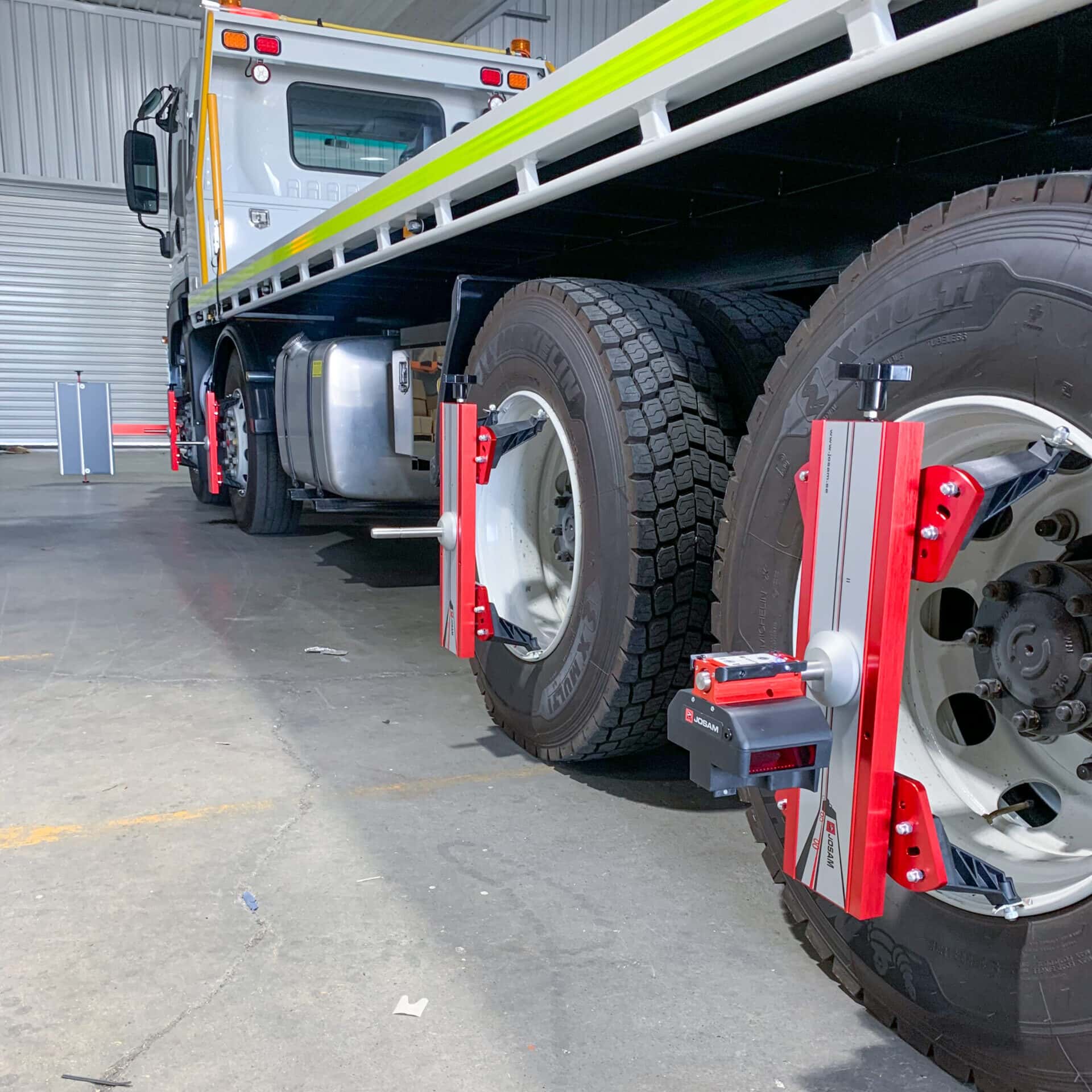
A tyre with plenty of tread can still be illegal. Since February 2021 it has been an offence to run tyres aged ten years or more on the front steered axle of an HGV, bus or coach.
What the rule covers
- HGVs, buses and coaches — no tyre aged 10 years or over on a front steered axle
- Minibuses — no tyre aged 10 years or over on any axle where tyres are fitted in single configuration, meaning one wheel per side
- Re-treads — treated the same, with the age counted from the date of re-treading rather than the original manufacture
Historic vehicles that meet the exemption criteria and are not used commercially are outside it. For everyone else it applies regardless of condition. A ten-year-old tyre with 14mm of tread and no visible damage is still a ten-year-old tyre.
Why age matters when the tread does not
Rubber degrades whether it is working or not. Oxidation hardens the compound, the bond between the casing plies weakens, and micro-cracking develops in places you cannot see from outside. None of that shows up on a tread depth gauge.
It matters most on a steer axle because that is the one position where a sudden failure takes the steering with it. The ban is narrow for exactly that reason — it targets the position where the consequence is worst.
The vehicles that get caught are the ones that do low mileage. A coach that runs seasonally, a recovery vehicle, a tipper that sits all winter, a minibus doing a short school run twice a day. Plenty of tread, plenty of years.
Reading the date code
Every tyre carries a four-digit code at the end of the DOT marking on the sidewall. The first two digits are the week, the last two the year. 2619 means the 26th week of 2019.
Two practical points. The code is often moulded on one side of the tyre only, so if you cannot find it, look at the inner face. And a tyre whose date code cannot be read is itself a failure at the annual test — if the examiner cannot establish the age, the tyre cannot be shown to comply.
What it costs you if you get it wrong
| Where it is found | What happens |
|---|---|
| Annual test | Dangerous fail |
| Roadside check | Immediate prohibition |
| Annual test, date code unreadable | Fail |
And an immediate prohibition on a tyre is the single most expensive line on the OCRS table: S-marked immediate on tyres, brakes or steering scores 400 points. We go through how that works in roadside checks, prohibitions and your OCRS score.
Everything else that fails on tyres
Age is the newest rule, not the most common problem. Condition of tyres is the second most common reason HGVs fail the annual test, behind only brakes — the figures are in our post on getting an HGV through its annual test first time.
What examiners find, in rough order of frequency:
- Tread depth below the limit, or uneven across the width, which is usually telling you about alignment or pressure rather than about the tyre
- Cuts, bulges and sidewall damage — kerbing damage on the near side is a classic
- Exposed cords or ply, which is an immediate prohibition every time
- Mixed tyre types or sizes across an axle
- Valve and valve cap faults, which sound trivial and are not on an inner twin
- Under-inflation, which destroys a casing from the inside long before it looks flat
Twin wheels hide a lot. An under-inflated or flat inner tyre is almost invisible from a walkaround and the outer one quietly carries the load until it fails too. That is the check worth teaching drivers to do properly — see driver walkaround checks.
A policy worth having
The rule only covers steer axles on HGVs, buses and coaches, and single-configuration axles on minibuses. Plenty of operators apply a ten-year limit across every position anyway, because the administrative cost of tracking which axle a given tyre is on is higher than the cost of the policy.
Whatever you choose, write the date codes down. A tyre audit once a year, recorded, means you find the problem in your own yard rather than at the side of the A629.
Tyres at CFM
We supply and fit commercial tyres for vans, trucks, buses and trailers as part of our servicing and repairs work, and tyre condition and age are checked on every safety inspection. Uneven wear usually has a cause worth finding — if the pattern points at geometry, that gets investigated rather than just replaced.
There is more on tyre defects in DVSA's guidance for HGVs, buses and trailers.
Book in at Keighley
CFM runs a two-lane DVSA Authorised Testing Facility, a DVSA-approved tachograph centre and an IRTE-accredited workshop at Parkside Works, Parkwood Street, Keighley BD21 4PJ. We are open 07:00–17:00 Monday to Friday and 07:00–12:00 on Saturday, and we cover Airedale, Bradford, Wharfedale, Craven and Leeds.
Call 01535 662706 or send us an enquiry — tell us the vehicle and what you need, and we will confirm the earliest available slot.