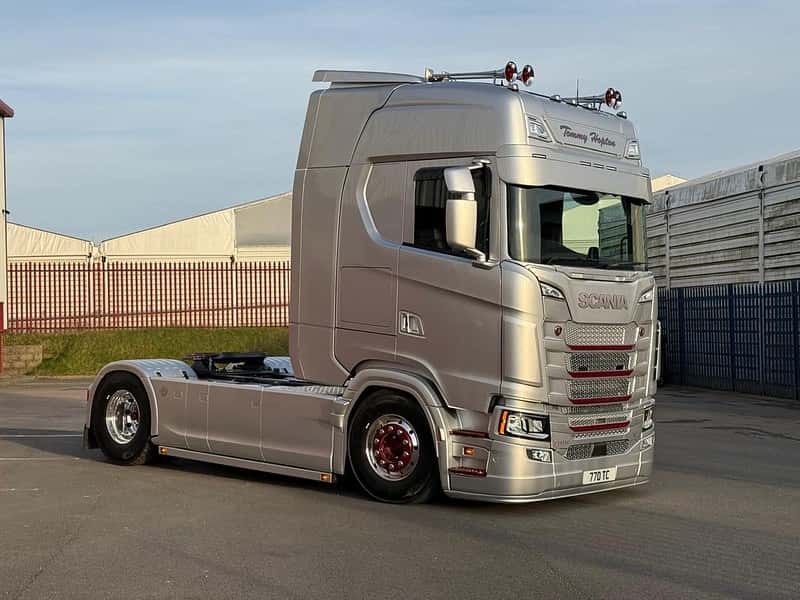
Brakes fail more annual tests than anything else, and it is not close. DVSA's own figures put brake systems and components at the top of the list for both vehicles and trailers, year after year.
What actually fails
These are the most common reasons HGVs failed their annual test in the first quarter of 2026/27, from DVSA's commercial vehicle testing data for Great Britain. A vehicle can fail on more than one item, so these do not add up to a total failure rate.
| Reason for failure | Share of tests |
|---|---|
| Brake systems and components | 5.92% |
| Condition of tyres | 3.68% |
| Glass and view of the road | 3.35% |
| Suspension | 2.90% |
| Oil leaks | 2.64% |
| Lamps | 2.52% |
| Condition of chassis | 1.96% |
| Steering | 1.88% |
| Service brake performance | 1.86% |
| Parking brake performance | 1.34% |
Trailers follow the same pattern even more sharply: brake systems and components first at 4.20%, then service brake performance at 2.38% and parking brake performance at 1.85%.
Why this list is encouraging
Look at what is on it. Lamps. Tyres. Glass and view of the road. Oil leaks. Almost none of this is obscure or expensive — it is the sort of thing a proper pre-test inspection finds in an afternoon.
The brake items are the exception, and they are the reason a test should never be the first time a vehicle's brake performance gets measured. Service brake performance and parking brake performance are both metered results. You either know the figures before you present the vehicle or you find out on test day.
What to do before the test
- Get a metered brake test in advance. A roller brake test outside the annual test tells you where you stand with numbers rather than impressions. We carry these out as voluntary brake tests, laden where that is what the vehicle needs.
- Walk it with the list above in hand. Lamps, markers, reflectors, tyre condition and tread, windscreen chips and wiper blades, visible oil leaks, chassis corrosion.
- Clean it. An examiner cannot assess a chassis or an underside they cannot see, and presentation genuinely affects how a borderline item is viewed.
- Check the paperwork. Plating certificate, any modifications, and the speed limiter.
- Fix the known fault. Presenting a vehicle with a defect you already knew about hoping it passes is an expensive gamble, and a failure is recorded against you either way.
Laden brake testing matters
An unladen brake test can look fine on a vehicle that will not make the numbers loaded. That is why we keep a loaded trailer and an on-site loading facility, so vehicles can be brake tested laden rather than hoped about. Our post on brake performance testing at every safety inspection goes into why the metered figures are worth having all year round, not just before a test.
Testing and repairs in the same place
CFM operates a two-lane DVSA Authorised Testing Facility with testing five days a week. The test itself is carried out by a DVSA examiner — that is what an ATF is, and our post on what a DVSA Authorised Testing Facility is explains how the arrangement works.
What we can do is prepare the vehicle beforehand, present it for you on the day, and put right anything that comes up in the workshop next door. That is usually the difference between a retest next week and a vehicle back on the road the same day.
Book in at Keighley
CFM runs a two-lane DVSA Authorised Testing Facility, a DVSA-approved tachograph centre and an IRTE-accredited workshop at Parkside Works, Parkwood Street, Keighley BD21 4PJ. We are open 07:00–17:00 Monday to Friday and 07:00–12:00 on Saturday, and we cover Airedale, Bradford, Wharfedale, Craven and Leeds.
Call 01535 662706 or send us an enquiry — tell us the vehicle and what you need, and we will confirm the earliest available slot.